In the annals of the Supreme Court, dissenting opinions often serve as a vital counterbalance to the prevailing majority. One of the most striking examples of this occurred on August 3, 1973, when Justice William O. Douglas, acting alone and far from the usual confines of the Court, issued a dissent that would challenge the very principles of executive power and constitutional authority. This dissent was not merely a disagreement but a profound reflection of the tensions between the legislative and executive branches during a tumultuous period in American history.
The Context of Constitutional Tensions
In the summer of 1973, the United States was embroiled in a political struggle that highlighted the complexities of constitutional authority. Following the withdrawal of U.S. troops from Vietnam, President Nixon continued to conduct bombing operations in neighboring Cambodia without congressional approval. This situation ignited a fierce debate over the limits of presidential power and the role of Congress in authorizing military actions. Legal scholars like Steve Vladeck have explored this intricate dance of power, often referring to it as a game of constitutional chicken.
Despite the withdrawal, Congress sought to rein in the executive branch’s military actions. The adoption of the Fulbright Proviso, which barred military support to Cambodia unless necessary for the withdrawal of forces or prisoners of war, exemplified Congress’s determination to assert its authority. In June 1973, Congress passed a bill prohibiting the use of funds for military operations in Cambodia unless explicitly authorized, but Nixon vetoed this legislation. The standoff between Congress and the president continued, leading to a complex compromise that ultimately fell short of resolving the constitutional impasse.
Justice Douglas’s Unorthodox Stance
Justice Douglas, known for his unyielding commitment to civil liberties and environmental issues, became a prominent figure in this constitutional crisis. His dissent arose from the belief that the actions taken by the Nixon administration were not only unconstitutional but also a betrayal of democratic principles. Douglas’s dissent was characterized by its sharp critique of the majority’s decision to overrule him, as he accused the other justices of impropriety in their haste to align with executive power.
In his opinion, Douglas articulated a vision of the Constitution that emphasized the importance of checks and balances. He argued that the executive branch should not have the unilateral authority to engage in military actions without the consent of Congress. This dissent resonated with many who were concerned about the implications of unchecked presidential power, particularly in the context of ongoing military operations in Cambodia.
To understand the broader implications of Douglas’s dissent, one must acknowledge the historical context in which it was issued. The Vietnam War had already caused significant societal upheaval, and the continued bombing of Cambodia was viewed by many as an extension of a flawed and controversial military strategy. Douglas’s dissent not only highlighted the constitutional issues at stake but also served as a rallying cry for those advocating for a more restrained and accountable executive branch.

Long-Term Implications of the Dissent
The dissent issued by Justice Douglas had lasting implications for the interpretation of executive power in the United States. It laid the groundwork for future legal challenges concerning the limits of presidential authority, particularly in matters of military engagement. The tension between congressional oversight and executive action remains a significant theme in American governance, echoing through contemporary debates on national security and foreign policy.
As legal scholars and practitioners continue to examine the ramifications of Douglas’s dissent, it becomes evident that the issues surrounding executive power are far from resolved. The ongoing discourse surrounding the unitary executive theory illustrates the complexities of this debate, as it raises questions about the balance of power between the branches of government.
- Justice Douglas’s dissent serves as a reminder of the importance of constitutional checks and balances.
- The historical context of the Vietnam War shaped the perspectives of those involved in the dissent.
- Future legal challenges continue to be influenced by the principles articulated in Douglas’s opinion.
- The tension between Congress and the executive remains a critical aspect of American governance.
Ultimately, the dissent of Justice Douglas stands as a testament to the ongoing struggle for a balanced and accountable government. His unorthodox stance not only challenged the status quo but also inspired subsequent generations to advocate for the principles of democracy and the rule of law.
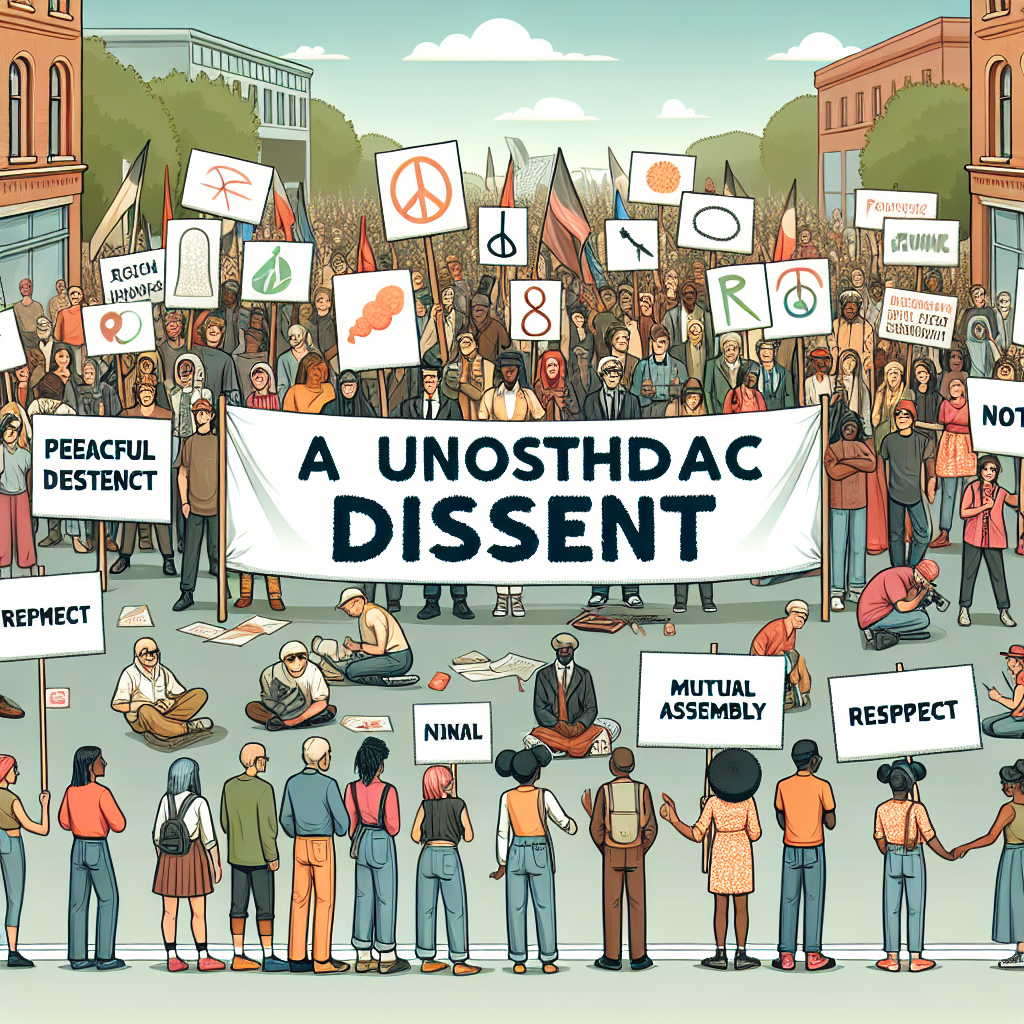
The concept of dissent within the Supreme Court often reveals the complexities of judicial interpretation and the balance of power among the branches of government. One of the most striking instances of unorthodox dissent emerged from Justice William O. Douglas during a critical moment in American history. His dissent not only challenged the majority opinion but also illuminated the ongoing struggle between the executive and legislative branches regarding military authority.
Justice Douglas and the Cambodian Bombing
In the summer of 1973, the United States found itself embroiled in a contentious debate over military operations in Cambodia. President Nixon continued to authorize bombing campaigns without congressional approval, leading to a significant clash over constitutional authority. Justice Douglas, known for his fierce independence and unyielding commitment to civil liberties, took a remarkable stand. He issued a ruling that called for the president to cease military actions in Cambodia, a move that was quickly overturned by the other justices who feared a constitutional crisis. This incident highlights the delicate balance of power and the role of the judiciary in checking executive authority.
The Legal and Political Landscape
The legal framework surrounding the U.S. military’s involvement in Cambodia was fraught with complexity. Congress had previously enacted the Fulbright Proviso, which aimed to limit military support unless it was necessary for the withdrawal of U.S. forces. Despite this, President Nixon’s administration continued to operate under the assumption that it had the authority to conduct military operations without explicit legislative approval. As legal scholars have pointed out, this situation represented a profound challenge to the principles of checks and balances that underpin the Constitution. The judicial agreement trends during this period reflect the tension between the branches of government and the evolving interpretation of executive power.
The Aftermath of Douglas’s Dissent
Douglas’s dissent not only brought attention to the ongoing military actions but also opened a dialogue about the limits of presidential power. His arguments underscored the necessity for congressional oversight in matters of war and military engagement. The dissent also served as a rallying point for those advocating for a more restrained approach to executive authority. In subsequent years, the implications of this dissent would resonate in various court cases, including those concerning intellectual disability ruling and its impact on judicial decisions regarding the rights of individuals facing capital punishment.
Legacy of Dissent in Judicial Decisions
The legacy of Justice Douglas’s dissent is evident in the ongoing discussions surrounding the judiciary’s role in shaping public policy and addressing issues of civil liberties. As courts continue to grapple with cases involving executive power and individual rights, the foundational principles articulated in Douglas’s dissent remain relevant. The ongoing debate over racial discrimination in jury selection serves as a contemporary reminder of the importance of dissenting opinions in fostering dialogue and advancing justice within the legal system. Douglas’s bold stance exemplifies how dissent can serve as a catalyst for change, challenging prevailing norms and encouraging a critical examination of constitutional principles.
The dissenting opinions of Supreme Court justices often reflect deep philosophical divides and can signal significant shifts in legal interpretation. One of the most remarkable instances of dissent occurred in 1973 when Justice William O. Douglas, known for his unorthodox views, took a stand against the majority of the Court regarding the Vietnam War’s expansion into Cambodia. This event not only highlighted the tensions between the executive and legislative branches but also underscored the role of the judiciary in safeguarding constitutional principles.
Justice Douglas and the Unorthodox Dissent
On August 3, 1973, Justice Douglas issued a dissent that was as bold as it was controversial. He did so while working alone, far from the traditional confines of the Supreme Court in Washington, D.C. His dissent came in response to the majority’s quick decision to overrule his order that required President Nixon to cease the bombing of Cambodia. Douglas’s dissent was not merely a disagreement; it was a scathing critique of his colleagues, whom he accused of capitulating to executive pressure. He described their actions as a failure to uphold the Constitution and a betrayal of their judicial responsibilities.

Douglas’s dissent is notable not only for its content but also for its context. The political climate of the time was fraught with tension, as Congress and the Nixon administration were engaged in a struggle over war powers. The president’s continuation of bombing campaigns in Cambodia without congressional approval raised significant constitutional questions. Douglas, in his dissent, articulated a vision of judicial independence that stood in stark contrast to the majority’s approach, which he viewed as compromising the rule of law.
The Constitutional Crisis
The constitutional crisis that Douglas identified was emblematic of a broader struggle over the balance of power in American governance. In the wake of the Vietnam War, Congress had attempted to reassert its authority over military actions through legislation, yet the president’s defiance of this authority illustrated the complexities of the separation of powers. Justice Douglas argued that the majority’s decision to override his order was not only a practical misstep but also a dangerous precedent that could undermine the checks and balances essential to the Constitution.
In his dissent, Douglas emphasized that the actions of the executive branch must always be subject to judicial review, especially when they involve fundamental rights and liberties. He believed that the Court had a duty to protect the Constitution from overreach by any branch of government. This perspective is particularly relevant today, as discussions about executive power and accountability continue to dominate political discourse. The implications of Douglas’s dissent extend beyond its immediate context, raising questions about the enduring nature of constitutional interpretation and the role of dissent in shaping legal precedents.
As legal scholars reflect on the significance of Douglas’s dissent, it becomes clear that it represents more than just a disagreement among justices; it is a powerful reminder of the importance of maintaining a vigilant judiciary. The concept of zombie precedent—where outdated or improperly established legal principles continue to influence contemporary decisions—can trace its roots back to moments like this, where judicial independence is challenged. Douglas’s unorthodox approach serves as a beacon for future justices and legal thinkers who strive to uphold the integrity of the Constitution against the tides of political expediency.