The recent oral arguments presented before the Supreme Court regarding the challenge to Hawaii’s gun law have sparked significant attention. The case, known as Wolford v. Lopez, centers on the law that restricts gun owners from carrying firearms onto private property that is open to the public without obtaining explicit permission from the property owner. This legal challenge highlights the ongoing debate surrounding the Second Amendment and its interpretation in contemporary society.
The Context of the Challenge
In 2023, Hawaii enacted a law that requires individuals with concealed-carry permits to seek permission before bringing firearms onto private property accessible to the public. This legislative move was largely seen as a response to the Supreme Court’s ruling in New York State Rifle & Pistol Association v. Bruen, which deemed certain gun licensing requirements unconstitutional. The Supreme Court’s decision in Bruen emphasized that any restrictions on gun ownership must align with historical traditions of firearm regulation in the United States. The challenge presented by Maui gun owners appears to resonate with this precedent, as they argue that the Hawaii law infringes upon their Second Amendment rights.
Arguments Presented in Court
During the oral arguments, Chief Justice John Roberts pointed out that the Second Amendment has been treated as a “disfavored right” in recent judicial interpretations. This sentiment was echoed by Justice Samuel Alito, who contended that Hawaii’s law effectively relegates the Second Amendment to a “second-class status.” The justices’ remarks suggest a growing concern regarding the balance between public safety and the rights of gun owners. gun law arguments have historically been contentious, and this case exemplifies the complexities involved in navigating individual rights versus legislative intent.
Legal Precedents and Implications
The implications of this case extend beyond Hawaii, as the Supreme Court’s decision could set a significant precedent for future gun legislation across the nation. The U.S. Court of Appeals for the 9th Circuit previously upheld the Hawaii law, suggesting that a national tradition exists that prohibits carrying firearms on private property without the owner’s consent. This interpretation, however, is now under scrutiny as the Supreme Court deliberates on the matter. The outcome of Wolford v. Lopez could redefine the scope of gun rights in public spaces and influence how similar laws are enacted and enforced nationwide.
Judicial Perspectives on the Second Amendment
The judicial perspectives presented by the justices indicate a potential shift in how the Second Amendment is viewed in relation to state laws. As the arguments unfold, the court must consider not only the historical context but also the contemporary implications of their ruling. The balance between individual rights and public safety remains a pivotal issue that the court must navigate. The ongoing developments in this case can be tracked through various legal analyses, including scotus developments that provide insights into the court’s direction and rationale.
The ongoing legal battle surrounding gun rights in the United States continues to evolve, with the Supreme Court recently indicating a sympathetic stance towards gun owners in a case challenging a Hawaii law. This law, enacted in 2023, restricts the ability of individuals with concealed-carry permits to bring firearms onto private property that is open to the public without first obtaining explicit permission from the property owner. The implications of this case, Wolford v. Lopez, could have far-reaching effects on the interpretation of the Second Amendment and the rights of gun owners nationwide.
Supreme Court’s Examination of the Hawaii Law
During oral arguments, the justices expressed concerns about the constitutionality of the Hawaii law. Chief Justice John Roberts pointed out that recent rulings suggest that the Second Amendment has been treated as a “disfavored right.” This sentiment was echoed by Justice Samuel Alito, who challenged the state’s position by asserting that Hawaii was relegating the Second Amendment to a status inferior to other constitutional rights. The law’s requirement for express permission from property owners was scrutinized, raising questions about its alignment with the historical context of firearm regulation in the United States.
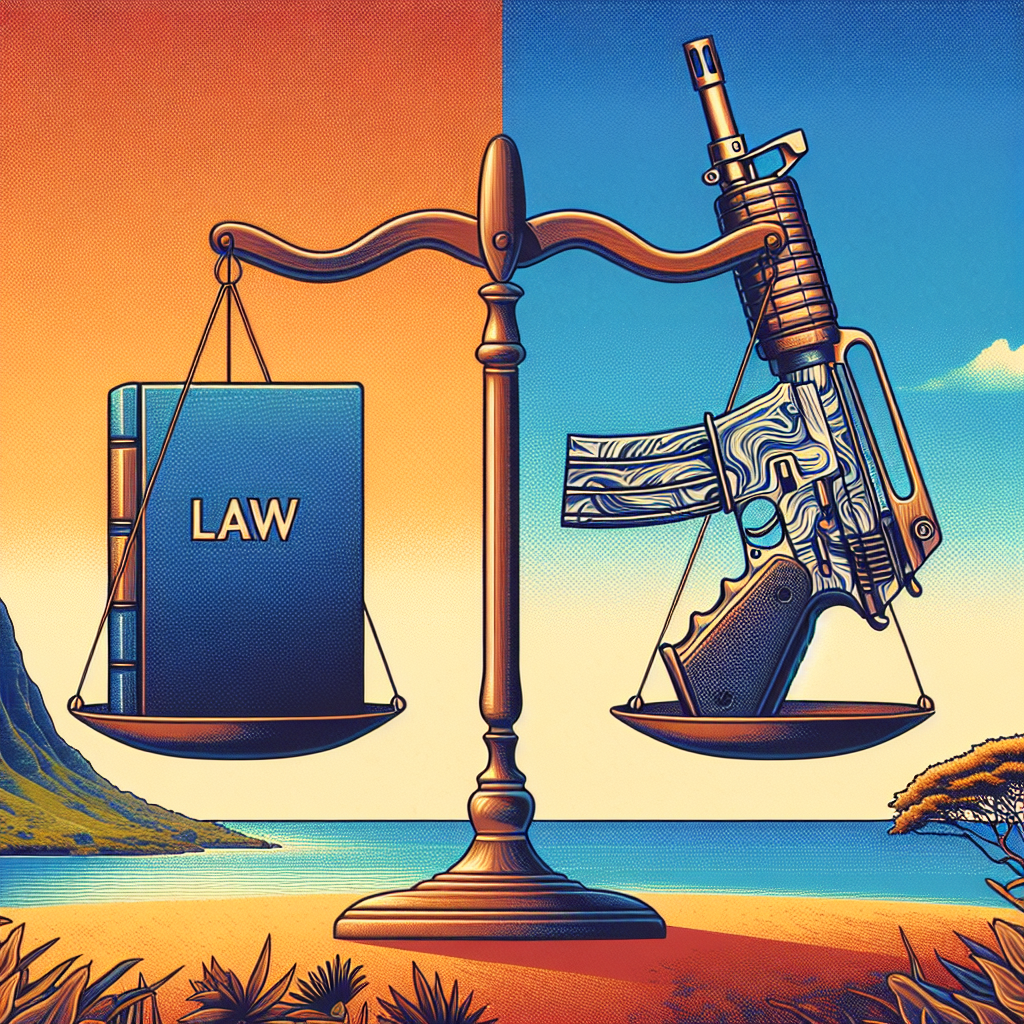
The law was implemented in response to the Supreme Court’s ruling in upcoming gun rights case, which invalidated restrictive licensing requirements in New York. In that decision, Justice Clarence Thomas articulated that gun regulations must be consistent with the nation’s historical tradition of firearm regulation, thereby setting a precedent that the Hawaii law may struggle to meet. The justices’ reactions during the proceedings suggested a potential shift in how lower courts might approach similar laws in the future.
Implications for Gun Owners and Legal Precedents
The implications of the Supreme Court’s eventual ruling in this case could be significant for gun owners across the country. If the court decides in favor of the challengers, it may establish a precedent that limits the authority of states to impose similar restrictions on gun ownership and use. This situation highlights a growing tension between state laws and the rights guaranteed under the Second Amendment, particularly in light of recent rulings that have favored gun rights.
As the legal landscape surrounding gun ownership continues to shift, the outcome of Wolford v. Lopez will be closely monitored by both advocates and opponents of gun rights. The U.S. Court of Appeals for the 9th Circuit had previously upheld the law, arguing that a national tradition likely exists of prohibiting the carrying of firearms on private property without the owner’s consent. However, the Supreme Court’s current deliberations could overturn this interpretation and reshape the future of gun legislation in the United States.
Legal experts are particularly interested in how the Supreme Court will balance public safety concerns with the rights of individuals to bear arms. As discussions surrounding this case unfold, it is essential to consider the broader implications of the ruling, especially in relation to other cases like the next big gun case that may also challenge existing laws. The outcome could influence not just Hawaii’s regulations, but also set a standard for how similar laws are evaluated across the nation.
In conclusion, the Supreme Court’s apparent sympathy towards the gun owners in Hawaii reflects a significant moment in the ongoing discourse around the Second Amendment. As the justices prepare to deliver their ruling, the legal community and the public await a decision that could redefine the boundaries of gun rights in America. The court’s eventual stance may also impact future cases, such as the double jeopardy firearm case, further shaping the landscape of gun legislation.

The ongoing legal battle surrounding Hawaii’s gun laws has captured the attention of the Supreme Court, particularly in the case of Wolford v. Lopez. The justices have shown a notable inclination towards the arguments presented by Maui gun owners contesting the state’s restrictions on carrying firearms in public spaces. This case raises significant questions regarding the interpretation of the Second Amendment and its application in contemporary society, as well as the balance between individual rights and state regulations.
Supreme Court’s Skepticism Towards Hawaii’s Law
During the oral arguments, the justices expressed skepticism about the validity of Hawaii’s law, which mandates that individuals with concealed-carry permits must obtain explicit permission from property owners before bringing firearms onto private property that is accessible to the public. Chief Justice John Roberts articulated concerns that the Second Amendment has been treated as a “disfavored right” in recent legal contexts. His comments, along with those from Justice Samuel Alito, who accused Hawaii of relegating the Second Amendment to a “second-class status,” indicate a potential shift in the Court’s approach to gun rights.
The law was enacted in 2023 as a direct response to the Supreme Court’s ruling in New York State Rifle & Pistol Association v. Bruen, which invalidated stringent handgun licensing requirements in New York. In that landmark decision, Justice Clarence Thomas emphasized that restrictions on gun ownership must align with the historical tradition of firearm regulation in the United States. The implications of this precedent are crucial for the Hawaii law, particularly as the justices consider whether it adheres to constitutional standards.
Legal Precedents and Implications
In the lower courts, the law was upheld, with the U.S. Court of Appeals for the 9th Circuit asserting that a national tradition likely exists prohibiting the carrying of firearms on private property without the owner’s consent. However, the Supreme Court’s current deliberations suggest that this interpretation may soon be challenged. The justices appear to be grappling with the fundamental question of whether such restrictions infringe upon the rights guaranteed by the Second Amendment.
Alan Beck, the attorney representing the gun owners, argued that the law’s requirements effectively disallow individuals from carrying firearms in public spaces unless they first secure permission from property owners. This, he contends, not only undermines the right to bear arms but also poses a practical barrier to lawful gun ownership. The potential consequences of this ruling extend beyond Hawaii, as it may set a national precedent regarding firearm restrictions and individual rights.
Broader Context of Gun Rights in America
The developments in this case resonate with broader discussions about gun rights and regulations across the United States. The Second Amendment has been the subject of intense debate, particularly in the wake of mass shootings and rising concerns about public safety. Advocates for gun control argue that stricter laws are necessary to prevent violence, while opponents maintain that such measures infringe upon constitutional rights.
As the Supreme Court deliberates, the outcome of Wolford v. Lopez could significantly influence the legal landscape regarding firearms and property rights. The Court’s decision may either reinforce the existing legal framework that permits states to impose restrictions or pave the way for a more expansive interpretation of the Second Amendment. This case encapsulates the ongoing tension between state regulations and individual liberties, highlighting the complexities inherent in balancing these competing interests.
For those interested in the implications of firearm restrictions, the legal principles established in this case could have enduring impacts. As discussions continue, stakeholders across the spectrum will be closely monitoring the Supreme Court’s eventual ruling, which could redefine the relationship between personal freedoms and state authority in the realm of gun ownership.
In summary, the Supreme Court’s apparent sympathy towards the gun owners’ challenge to Hawaii’s law signals a potential shift in how courts interpret the Second Amendment. The outcome of this case not only affects the individuals involved but also has far-reaching implications for gun rights nationwide. As this legal battle unfolds, it will be essential to watch how the Court navigates the intricate dynamics of constitutional rights and state laws.