In a significant legal maneuver, California Republicans have petitioned the U.S. Supreme Court, urging the justices to invalidate a newly drawn congressional map that they argue is racially discriminatory. This request follows a similar case in Texas, where the Supreme Court recently allowed a controversial map to remain in effect, despite concerns about its constitutionality. The California Republicans contend that the new map, which was designed in response to the Texas map, unfairly favors Democratic candidates by manipulating district boundaries under the pretext of partisan redistricting.
Background on Redistricting and Recent Developments
Redistricting is a critical process that occurs every ten years following the national census, allowing states to redraw congressional district lines. These maps can significantly influence electoral outcomes, particularly in closely contested areas. In December, the Supreme Court permitted Texas to implement a map that added five Republican seats in the U.S. House, rejecting a lower court’s ruling that claimed the map unconstitutionally segregated voters based on race. Following this precedent, California Republicans have argued that their state’s new map similarly employs race as a tool for partisan advantage.
California’s Congressional Map Dispute
In their legal filing, California Republicans decried the new congressional map as a “pernicious and unconstitutional use of race” under the guise of partisan line-drawing. They assert that the map was crafted with the intent to bolster Democratic representation, effectively diluting the voting power of Republican constituents. The challengers have requested that the Supreme Court expedite the proceedings, seeking a ruling by February 9, the date when candidates must declare their intention to run for Congress in California.
The urgency of the request is underscored by the tight margins in the House of Representatives, where every seat is crucial for maintaining political power. The redistricting cases in both Texas and California highlight the contentious nature of this process, where allegations of gerrymandering can lead to significant legal battles. The Supreme Court’s decision on this matter could set a precedent affecting how states approach redistricting in the future.
Legal Implications and Future Considerations
The legal implications of California’s congressional map are profound, especially considering the Supreme Court’s recent actions in the Texas case. A three-judge federal district court had previously ruled against Texas’s map, citing substantial evidence of racial gerrymandering. This ruling suggests that the courts are increasingly willing to scrutinize how race is used in the drawing of electoral districts. In California, the Republicans are now seeking similar judicial intervention to halt the implementation of their state’s map.
Next Steps in the Legal Process
The Supreme Court’s involvement in this case could lead to additional hearings and arguments, as the justices assess the merits of the Republicans’ claims. The call for further briefing indicates that the challengers are prepared to present a detailed case against the map, emphasizing its alleged discriminatory nature. As the legal landscape evolves, both parties are watching closely, with the potential for significant shifts in congressional representation.
As this case unfolds, it will be crucial to monitor how the Supreme Court addresses the intersection of race and politics in redistricting. The outcome could have lasting effects on the political dynamics within California and beyond, influencing future electoral strategies. Moreover, the implications of this case may extend to other states grappling with similar challenges, as evidenced by the ongoing discussions surrounding the intellectually disabled inmate case that highlights the complexities of legal interpretations in sensitive matters.

In a significant legal move, California Republicans have urged the Supreme Court to invalidate a newly drawn congressional map, alleging that it is racially discriminatory. This action follows a similar situation in Texas, where the Supreme Court recently allowed a new congressional map that was criticized for racial gerrymandering. The California Republicans argue that the map, which aims to enhance Democratic representation, employs race as a basis for partisan advantage, thus undermining electoral fairness.
Legal Background and Context
The legal landscape surrounding congressional redistricting has become increasingly contentious, particularly following the Supreme Court’s decision regarding Texas’s congressional map. In December, the Court permitted Texas to implement a map that allegedly discriminated against voters based on race, despite a lower court’s ruling that deemed the map unconstitutional. This precedent has set the stage for California Republicans to challenge their state’s map, which they claim was drawn under similar pretenses of racial discrimination.
California’s new congressional map was adopted in response to the changes made in Texas, with the intent to secure additional Democratic seats. In a legal filing obtained by The New York Times, the challengers described the map as a “pernicious and unconstitutional use of race” disguised as partisan line-drawing. They argue that the map effectively segregates voters along racial lines, which could lead to significant electoral imbalances. The call for the Supreme Court to intervene stems from the urgency of upcoming candidacy filings, which are set to begin on February 9.
Implications of Racial Gerrymandering
The implications of racial gerrymandering are profound, as they can distort the political landscape and undermine the principle of equal representation. The California Republicans contend that the newly drawn map not only violates constitutional principles but also sets a dangerous precedent for future redistricting efforts. In their view, the manipulation of district boundaries based on race can lead to a diminished voice for certain voter groups, effectively nullifying their electoral power.
As the Supreme Court considers this case, parallels can be drawn to other recent rulings, including those related to transgender athlete bans and disputes over immigration judges. Each of these cases highlights the Court’s role in adjudicating complex issues where race and politics intersect. The outcome of the California challenge could have significant ramifications not only for the state but also for the broader national dialogue on redistricting and electoral integrity.

Next Steps in the Legal Process
As the legal battle unfolds, the California Republicans have requested that the Supreme Court expedite the review process. They are seeking additional briefing and oral arguments to address their claims against the congressional map. The urgency of their request is underscored by the impending deadlines for candidates wishing to file their paperwork, which adds a layer of complexity to the proceedings.
The Supreme Court’s decision to take up this case could lead to a re-evaluation of how states approach redistricting, particularly in light of the evidence presented in the Texas case. The California Republicans’ assertion that their state’s map was drawn with racial considerations in mind mirrors concerns raised in the Texas litigation, where a federal district court found substantial evidence of racial gerrymandering. This ongoing dialogue about electoral fairness and representation will likely continue to evolve as the Court deliberates.
In conclusion, as the Supreme Court prepares to address the California Republicans’ challenge, the implications of their ruling could resonate throughout the nation. The intersection of race and politics in redistricting remains a contentious issue, and the Court’s decisions will undoubtedly shape the future of electoral processes across the United States. The legal community is closely monitoring this case, recognizing its potential to influence not just California’s congressional map but also the landscape of redistricting nationwide.
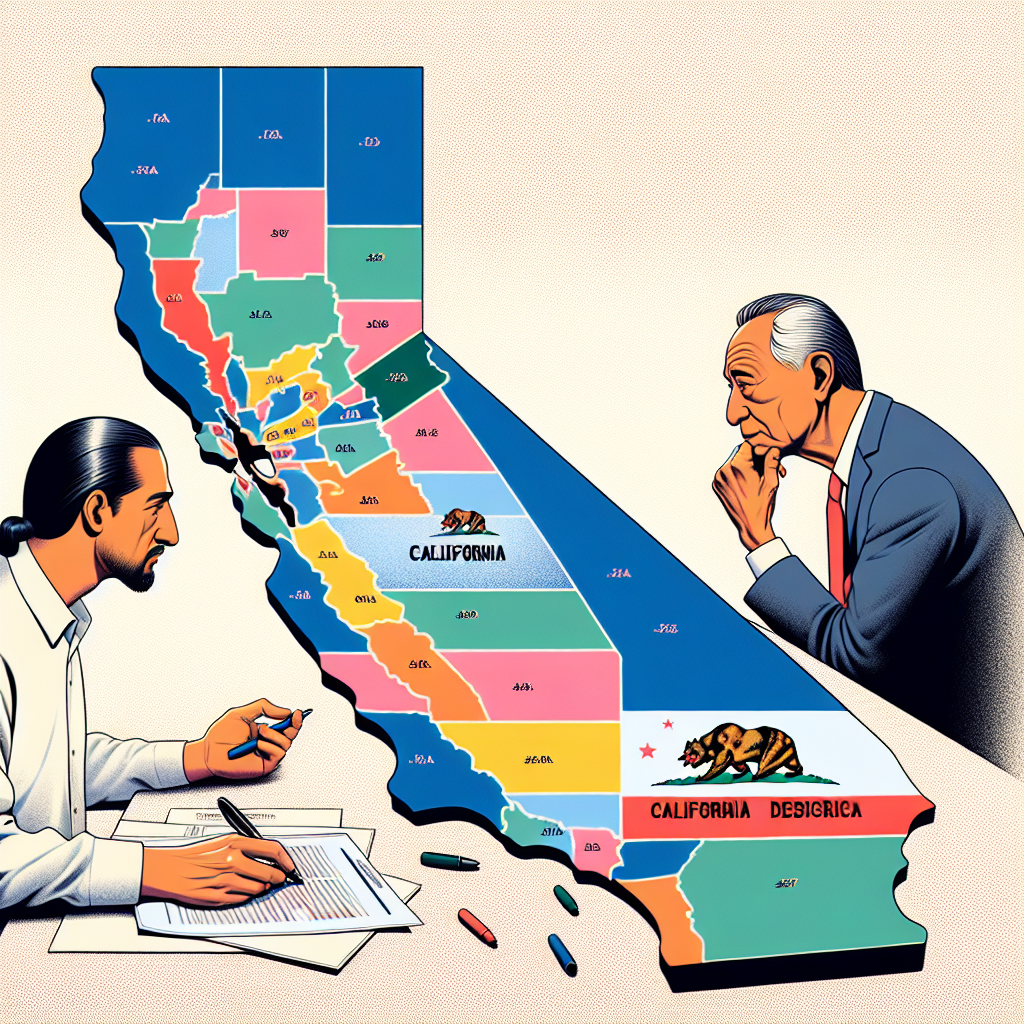
The ongoing legal battles surrounding congressional redistricting have intensified, particularly in California, where state Republicans are urging the Supreme Court to intervene against a newly drawn congressional map. This map, they argue, is racially discriminatory and was created under the pretext of partisan interests. The legal implications of this case are significant, as it reflects broader tensions in the political landscape, especially regarding how race is utilized in the drawing of electoral boundaries.
California Republicans’ Legal Challenge
In their filing with the Supreme Court, California Republicans assert that the new congressional map unfairly favors Democratic candidates by manipulating district lines based on racial demographics. They claim that this practice not only undermines the integrity of the electoral process but also violates constitutional protections against racial discrimination. The challengers are requesting that the Supreme Court expedite the review process, suggesting that additional briefings and oral arguments be scheduled promptly. This urgency stems from the imminent deadline for candidates to file their paperwork for the upcoming elections, which begins on February 9.
Context of the Redistricting Battle
The backdrop to this legal dispute is the recent congressional map approved in Texas, which has also faced scrutiny for its alleged racial gerrymandering. The Supreme Court’s allowance for Texas to implement its new map, despite lower court findings of unconstitutional voter sorting, has set a precedent that California Republicans hope to challenge. They argue that the Supreme Court must apply the same scrutiny to California’s map, as both cases highlight the contentious intersection of race and politics in electoral districting.
The Implications of Racial Gerrymandering
Racial gerrymandering poses serious implications for democratic representation. When district lines are drawn to dilute the voting power of specific racial groups, it not only affects election outcomes but also erodes public trust in the electoral system. The California Republicans’ assertion that the new map is a “pernicious and unconstitutional use of race” underscores the potential for lasting damage to the political landscape if such practices are left unchallenged. This case may serve as a pivotal moment in determining how race can be considered in the redistricting process moving forward.
Future Consequences
The outcome of this Supreme Court case could have far-reaching consequences beyond California. If the court rules in favor of the Republicans, it may set a legal precedent that restricts the use of race in drawing congressional maps across the nation. Conversely, a ruling that upholds the California map could embolden states to adopt similar strategies, potentially leading to further polarization in the political arena. As this case progresses, observers will be closely monitoring its implications for future redistricting efforts and the protection of voting rights.
As the debate over congressional maps continues, it is essential to consider the broader implications of these legal battles. The evolving landscape of racial discrimination in electoral processes raises critical questions about representation and fairness. For those interested in the intersection of race and legal proceedings, the ongoing racial discrimination case highlights the complexities involved in maintaining a just electoral system.