The ongoing legal battle between Louisiana coastal parishes and oil and gas companies has reached the Supreme Court, where justices are deliberating whether these companies can transfer a lawsuit related to coastal damage to federal court. This case, Chevron USA Inc. v. Plaquemines Parish, centers on a dispute regarding the responsibility of these companies for environmental degradation caused by their operations during World War II. The implications of this case extend beyond Louisiana, touching on broader themes of corporate accountability and environmental protection.
The Legal Framework and Arguments Presented
During the proceedings, the companies argued for their right to move the lawsuit under the federal officer removal statute. This statute allows federal courts to hear cases against individuals acting under the authority of a federal officer. Paul Clement, representing the companies, emphasized that the actions in question were part of a joint effort during the war to maximize oil production, which was crucial for supplying the military with petroleum products. The argument hinges on the interpretation of whether these actions qualify for federal jurisdiction, raising significant questions about the extent of federal oversight in state matters.
Concerns were raised by several justices regarding the potential implications of granting such jurisdiction. They questioned whether allowing oil and gas companies to claim federal protection could set a precedent that undermines state authority. The justices seemed particularly wary of the broad application of the companies’ arguments, which could impact future cases involving corporate accountability. The absence of Justice Samuel Alito, who recused himself due to a financial interest in a related company, further complicated the court’s dynamics during this critical discussion.
The Context of the Lawsuit
This lawsuit is part of a larger series of legal actions initiated by Louisiana coastal parishes over a decade ago, aimed at holding oil and gas companies accountable for environmental damage. The parishes contend that the historical practices of these companies, particularly during World War II, have led to significant degradation of the coastal ecosystem. They are seeking damages to fund restoration efforts and to address the long-term impacts of oil extraction on their environment. The complexities of this case highlight the ongoing struggle between economic interests and environmental stewardship in Louisiana.
As the Supreme Court deliberates, the outcome of this case will likely have far-reaching consequences. Not only will it affect the specific coastal parishes involved, but it could also influence how similar cases are handled across the country. The legal precedent set by this decision may redefine the boundaries of state versus federal jurisdiction in environmental cases, especially those involving substantial corporate interests. For more insights into related legal matters, one can explore the implications of campaign finance limitations or review the complexities surrounding the death row inmate case.
The ongoing legal battle in Louisiana over the responsibility of oil and gas companies for coastal damage has reached a critical juncture as the Supreme Court hears arguments regarding jurisdictional issues. Central to the case is whether these companies can successfully transfer the lawsuit from state court to federal court, a move that could significantly impact the outcome of the litigation. The implications of this case extend beyond Louisiana, potentially influencing how similar disputes are handled across the United States.

Legal Arguments and Implications
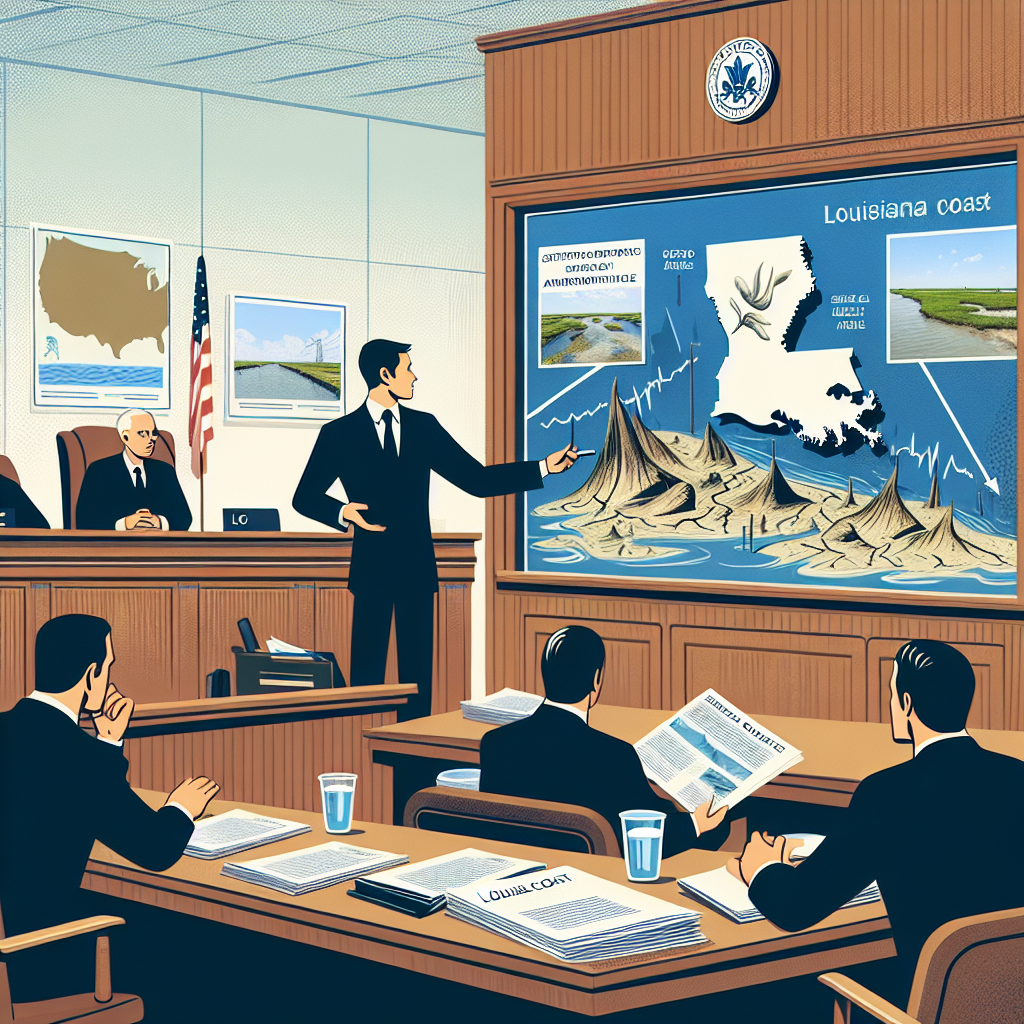
During the proceedings, the arguments presented by Paul Clement, representing the oil and gas companies, focused on the federal officer removal statute. This statute allows for federal jurisdiction in cases involving actions taken under the authority of federal officers. Clement contended that the companies’ operations during World War II, which were supported by the federal government, should fall under this statute, thereby justifying the transfer to federal court. His assertion raises questions about the historical context of oil production and its significance during wartime efforts.
However, the justices expressed skepticism regarding the broad application of the federal officer removal statute. Concerns arose about the potential implications of allowing companies to evade state-level accountability by invoking federal jurisdiction. This situation mirrors other legal disputes, such as those involving racial discrimination jury selection issues, where the balance between state and federal jurisdiction is heavily scrutinized. The justices’ hesitance to fully endorse the companies’ position suggests a careful consideration of the precedent this case could set.
Historical Context and Legal Precedents
The lawsuit, initiated over a decade ago by various coastal parishes in Louisiana, seeks to hold oil and gas companies accountable for environmental damage allegedly caused by their operations. The plaintiffs argue that the companies’ predecessors engaged in practices that not only violated state laws but also contributed to significant degradation of the coastal ecosystem. Such claims resonate with broader environmental litigation trends, including cases where private parties sue large corporations for environmental harm.
As the court deliberates, the absence of Justice Samuel Alito, who recused himself due to a conflict of interest, adds another layer of uncertainty to the proceedings. His absence could impact the court’s ability to reach a decisive ruling, particularly if the remaining justices are divided on the key issues at hand. This scenario highlights the complex interplay between judicial composition and the outcomes of significant legal battles.
Potential Outcomes and Future Implications
The outcome of this case could set a precedent for future litigation involving environmental damage and corporate responsibility. Should the court favor the oil and gas companies, it may embolden other industries to seek similar protections under federal law, thus complicating efforts by states to regulate harmful practices. This potential shift in legal interpretation could resonate in other contexts, such as those involving IQ tests and execution cases, where the delineation of state versus federal authority is critical.
Conversely, a ruling in favor of the Louisiana parishes could reinforce state sovereignty in environmental matters and encourage further legal actions against companies deemed responsible for ecological damage. The implications of this case extend beyond Louisiana, potentially influencing environmental law and corporate accountability on a national scale. As the justices weigh the arguments, the outcome will likely reflect broader societal values regarding environmental protection and corporate responsibility.
The ongoing legal battle over the environmental impact of oil and gas companies on the Louisiana coastline has reached a critical juncture. As the Supreme Court deliberates on the case involving Chevron USA Inc. and Plaquemines Parish, the implications of their decision could resonate far beyond the courtroom. This case is not merely a dispute over jurisdiction; it embodies the larger struggle between state rights and federal authority regarding environmental accountability.
Legal Arguments and Implications
During the proceedings, the justices were presented with arguments regarding the applicability of the federal officer removal statute. This statute allows certain cases to be moved from state to federal court, primarily when the federal government is involved. Paul Clement, representing the oil companies, asserted that their actions during World War II, including the extraction and transportation of oil, were conducted under federal directives. He argued that this historical context justifies their request for federal jurisdiction. However, several justices expressed skepticism regarding the broad interpretation of this statute, raising concerns about the precedent it could set if companies could routinely claim federal protections for actions taken under state laws.
Concerns from the Justices
The skepticism from the bench highlighted the potential ramifications of the court’s decision. Justices questioned whether allowing such a removal would undermine state authority and hinder local efforts to seek justice for environmental degradation. The absence of Justice Samuel Alito, who recused himself due to a financial interest in one of the defendant’s parent companies, added an element of uncertainty to the proceedings. His absence meant that the court’s deliberations might lack a complete perspective on the implications of the case, making it difficult to predict the outcome.
Historical Context and Ongoing Litigation
This case is part of a broader series of lawsuits initiated by Louisiana coastal parishes over a decade ago. These parishes contend that oil and gas companies have historically contributed to the degradation of the coastline through their extraction activities. As the state grapples with the consequences of coastal erosion, the lawsuits represent an effort to hold these companies accountable for their role in environmental damage. The plaintiffs argue that the companies should be financially responsible for the restoration and protection of the coast, reflecting a growing trend of litigation aimed at addressing environmental issues.
Future of Environmental Accountability
The outcome of this case could have significant implications for how environmental accountability is enforced across the United States. If the Supreme Court rules in favor of the oil companies, it could set a precedent that allows for more extensive federal jurisdiction over state environmental claims. Conversely, a ruling favoring the Louisiana parishes could empower states to pursue similar lawsuits against corporations, reinforcing the principle that companies must be held accountable for their environmental impact. The stakes in this case extend well beyond Louisiana, potentially affecting how environmental law is interpreted nationwide.
As this case unfolds, it serves as a crucial reminder of the intricate relationship between state and federal law and the ongoing struggle for environmental justice. The legal community and environmental advocates alike are closely monitoring the proceedings, as the implications of the Supreme Court’s decision could shape the future landscape of environmental litigation in the United States. For those interested in the broader context of legal accountability, the discussion around international law violations may also provide valuable insights into how legal frameworks can intersect with environmental issues.